
Course Overview
The Red Hat Enterprise Linux Diagnostics and Troubleshooting (RH342) provides system administrators with the tools and techniques they need to successfully diagnose, and fix, a variety of potential issues. Students will work through hands-on problems in various subsystems to diagnose and fix common issues.
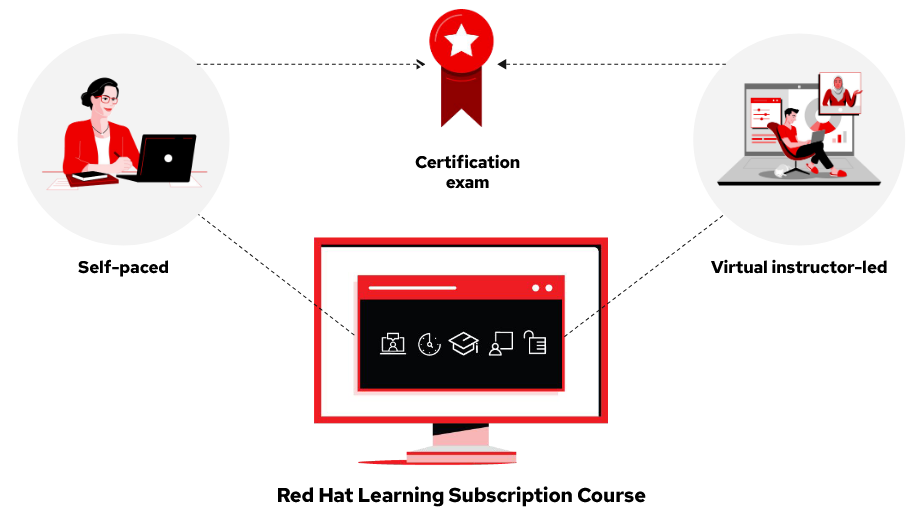
This course also includes the exam, Red Hat Certified Specialist in Linux Diagnostics and Troubleshooting Exam (EX342).
Note on the exam:
The subscription duration of 365 days starts upon order submission. Cancelation of individual exam sessions is not allowed Exam session fees are nonrefundable. Non-Cancelable components: No part of any Bundles that includes both non-cancelable and cancelable components may be canceled.
Who should attend
The Red Hat Enterprise Linux Diagnostics and Troubleshooting course is aimed at senior system administrators who wish to learn more about troubleshooting.
Certifications
This course is part of the following Certifications:
Prerequisites
Red Hat recommends these prerequisites:
- Required to have earned a Red Hat Certified System Administrator (RHCSA)
- Recommended to have earned a Red Hat Certified Engineer (RHCE)
Course Objectives
Impact on the organization
This course is intended to develop the skills needed to prevent costly downtime due to system failure and quickly recover failed systems using analysis, diagnosis, and troubleshooting.
Red Hat has created this course in a way intended to benefit our customers, but each company and infrastructure is unique, and actual results or benefits may vary.
Impact on the individual
As a result of attending this course, students should be able to analyze the operational state of computer systems and identify potential issues. When problems appear, students will be able to successfully resolve the issue, returning it to a secure and stable working condition.
Students should be able to demonstrate the following skills:
- Diagnostic and analysis procedures
- Preventive maintenance planning and implementation
- System recovery using proven tools and techniques
Detailed Course Outline
Introduction to troubleshooting
Describe a generalized strategy for troubleshooting.
Take proactive steps to prevent small issues
Prevent small issues from becoming large problems by employing proactive system administration techniques.
Troubleshoot boot issues
Identify and resolve issues that can affect a system's ability to boot.
Identify hardware issues
Identify hardware problems that can affect a system’s ability to operate.
Troubleshoot storage issues
Identify and fix issues related to storage.
Troubleshoot RPM issues
Identify and fix problems in, and using, the package management subsystem.
Troubleshoot network issues
Identify and resolve network connectivity issues.
Troubleshoot application issues
Debug application issues.
Deal with security issues
Identify and fix issues related to security subsystems.
Troubleshoot kernel issues
Identify kernel issues and assist Red Hat Support in resolving kernel issues.
Red Hat Enterprise Linux Diagnostics and Troubleshooting comprehensive review
Practice and demonstrate knowledge and skills learned in Red Hat Enterprise Linux Diagnostics and Troubleshooting.
Course Content
Students will learn how to apply the scientific method to a structured form of troubleshooting. This approach is then used troubleshooting various types of problems, including boot issues, hardware issues, storage issues, RPM issues, network issues, third-party application issues, security issues, and kernel issues. At the end of the course students can complete various comprehensive review labs to test their skills.
Course summary
- Use the scientific method to approach troubleshooting
- Troubleshoot boot issues
- Troubleshoot security issues
- Troubleshoot storage issues
- Troubleshoot network issues
 German